
Picotee goodeid
| Family | Goodeidae |
|---|---|
| Genus | Zoogoneticus |
| IUCN category (World) | EN |
Introduction
Zoogoneticus quitzeoensis, commonly known as Picotee goodeid, is a small freshwater fish belonging to the Goodeidae family. Endemic to Mexico, this species historically occurred in the states of Guanajuato and Michoacán, mainly inhabiting the endorheic basin of the Río Grande de Morelia (including Lake Cuitzeo and the Cointzio reservoir) and the basin of the Río Angulo (including Lake Zacapú).
Once distributed in the middle basin of the Río Lerma and the Yuríriga lagoon, the species has disappeared from these areas and now has about 55% less distribution range compared to its historical extension. Classified as Endangered (EN) by the IUCN, it faces critical threats such as droughts exacerbated by climate change, water pollution (wastewater, pesticides, sedimentation), and competition with invasive exotic species.
Who is it?
Morphology
-
Average size4.5 cm
-
Maximum size5.1 cm
-
Average size4.5 cm
-
Maximum size5.1 cm
How to recognize This fish ?
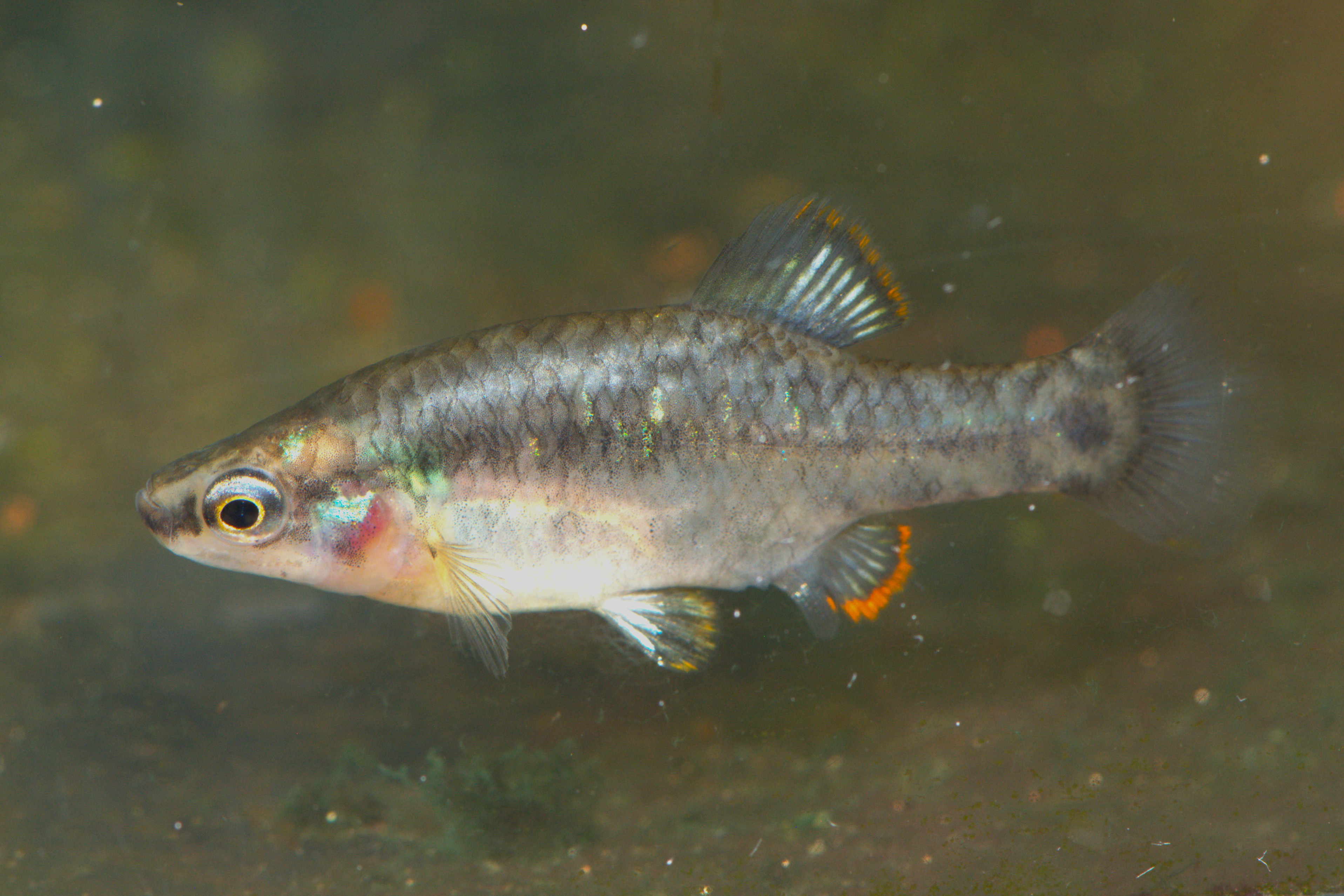
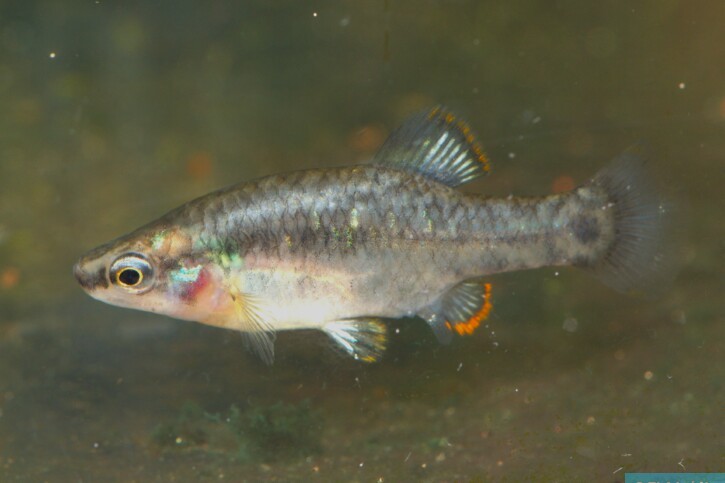
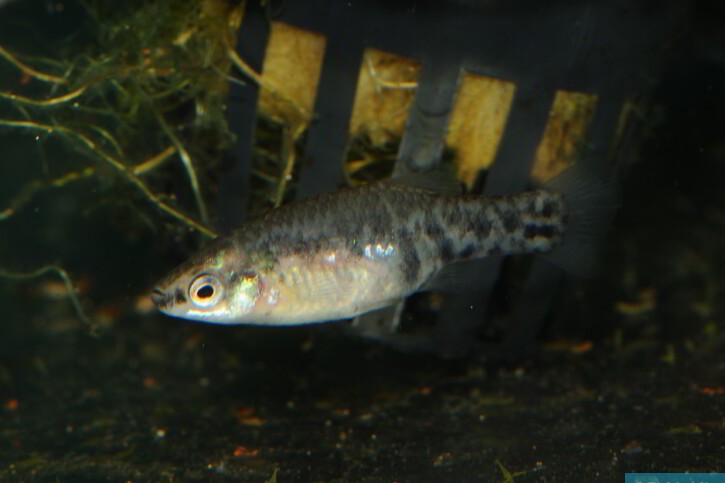
The silhouette of Zoogoneticus quitzeoensis is elongated and laterally compressed, typical of goodeids. Males reach a maximum standard length of 5.1 cm, while females measure up to 4.5 cm in total length. The coloration is subtle, ranging from grayish to olive brown, often enhanced with golden or greenish highlights on the flanks.
Sexual dimorphism
The fins, usually transparent to yellowish, are distinguished in mature males by a fine bright orange margin, a characteristic trait of the species. Sexual dimorphism is marked by the structure of the anal fin: males have modified gonopods (reproductive structures) characteristic of the Goodeinae, while females have a rounded anal fin and a more robust body, especially when gravid.
Behaviour & Life cycle
-
dietcarnivorous
-
Sociabilitygregarious
-
territorialNo
-
Way of livingdiurnal
This demersal species lives in small groups in shallow areas, displaying gregarious behavior to protect themselves from predators. Its carnivorous diet consists mainly of small invertebrates that it captures in the water column or near the bottom. Active during the day, it densely explores aquatic vegetation for food, using plant cover as a refuge against piscivorous birds (herons, pelicans) whose predation pressure varies seasonally.
Reproduction
-
Reproductionvivipare
Zoogoneticus quitzeoensis is viviparous, a distinctive feature of the Goodeinae subfamily. Females give birth to fully formed young every approximately 55 days, without a mandatory resting period between broods under favorable conditions. Sexual maturity is quickly reached, around 3.5 cm in length. This frequent reproductive capacity allows the species to maintain its populations despite high natural mortality, although this resilience is currently threatened by the rapid degradation of its habitats.
Harmless species
The species is harmless to humans. Small in size and lacking dangerous structures, it poses no risk of injury or toxicity.
Origin and distribution
Geographic distribution & Conservation
The current distribution range of Picotee goodeid is limited to a few fragmented localities in central Mexico. It persists in Lake Cuitzeo, the Cointzio reservoir, the sources of the Río Grande de Morelia (such as La Mintzita), and Lake Zacapú. Populations from the Lerma and Turbio rivers, once abundant, have not been found in recent surveys, suggesting local extirpation.
Conservation status of populations (IUCN)
What is its habitat?
Natural environment characteristics
-
Temperature20 - 28 °C
-
pH (acidity)6.5 - 7.2
-
FlowSlow
Biotope presentation
This fish resides in shallow lakes, ponds, streams, canals, and ditches, preferring clear to moderately turbid waters with a weak to moderate current. It occupies the upper water column, generally at less than one meter deep (often less than 0.6 m), amidst dense vegetation composed of green algae, water hyacinths (Eichhornia), bulrushes, pondweeds, and water lentils. Substrates range from clay and mud to sand, gravel, and decomposing organic debris. In Lake Zacapú, it specifically seeks refuge among dense roots and foliage of willows along the banks, where the water remains cool thanks to surrounding cold springs (19°C). The quality of these vegetative habitats is crucial for its survival, providing both food and protection against predators and seasonal drying.


To go further




Sources & Contributions
Participation & Validation
The Fishipedia team and specialist contributors are committed to providing high-quality content. However, although the information comes from scientific sources or testimonials from specialists, the cards may contain inaccuracies.

Benoit Chartrer
Translation
Translation done with the valuable contribution of our translators, who make this information available to a wider audience. We sincerely thank them for their commitment.
Scientific partners



Tags


