
Introduction
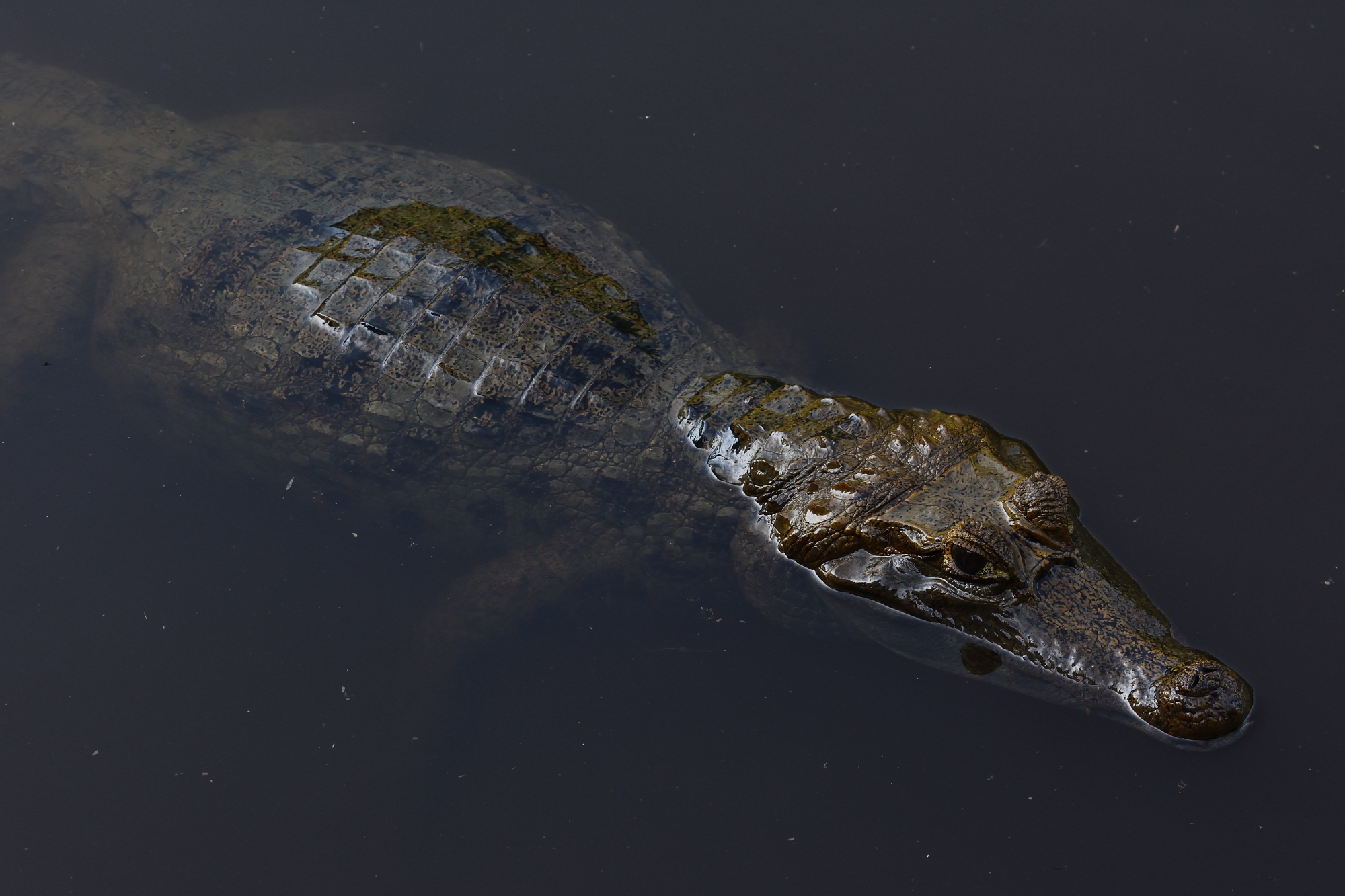
The Spectacled Caiman, scientifically named Caiman crocodilus, is the most widespread crocodilian species in the American continent. This semi-aquatic reptile belongs to the Alligatoridae family and is known for its great ability to adapt to environmental variations. Its presence extends over a vast geographical area covering Central America and a large part of South America. Human-introduced populations now exist in the United States, Cuba, and Puerto Rico, where they are sometimes considered invasive. The International Union for Conservation of Nature classifies this species as a species of least concern due to the overall stability of its populations.
Who is it?
Morphology
-
Size150 - 270 cm
-
Mimicryplants
-
Size150 - 270 cm
-
Mimicryplants
How to recognize This reptile ?
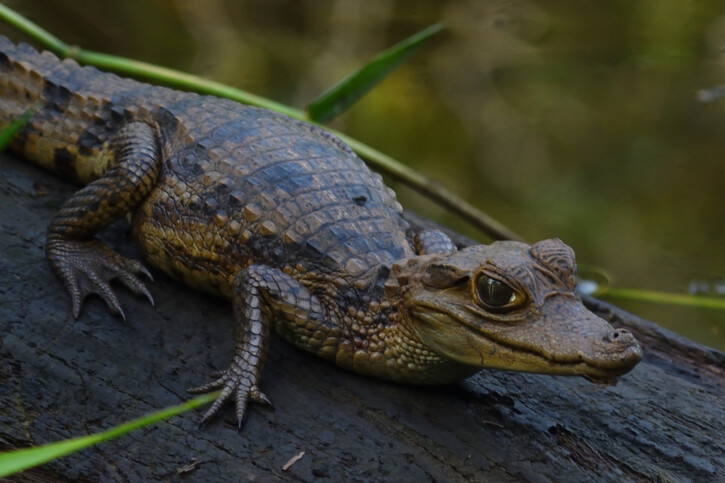
The adult has an average length ranging from 1.5 meters to 2.5 meters, with males sometimes reaching 2.7 meters in optimal conditions. Its body is covered with bony scales called osteoderms, which form a protective armor on the back and tail. The overall coloration ranges from olive green to grayish-brown, with visible dark transverse bands on the flanks and tail in young individuals. The distinctive feature of the species lies in a bony ridge located between the orbits, which gives it its vernacular name of Spectacled Caiman. The snout is relatively short and wide, gradually widening towards its end.
Sexual dimorphism
Males significantly exceed females in size and body mass as adults. Mature males commonly reach a snout-vent length greater than 90 centimeters, while females generally remain smaller with an average less than 75 centimeters. This size difference becomes more pronounced with age and plays a determining role in social hierarchy and access to reproduction. Females reach sexual maturity at a smaller size than males, confirming a marked growth dimorphism within the species.
Behaviour & Life cycle
-
Sociabilityliving in colonies
-
Way of livingdiurnal
-
VenomousNo
-
Dietpredator
This gregarious species often forms large groupings, particularly during the dry season when water sources become scarce. Individuals communicate through complex visual and auditory signals, including threat postures and specific vocalizations. The diet is mainly piscivorous, although the caiman also captures crustaceans, mollusks, and occasionally small mammals or birds. Hunting techniques vary from motionless ambush to active methods of driving prey towards the shore using tail movements. Predation activity generally intensifies at dawn and dusk, but can continue during the night or day depending on thermal conditions.
Reproduction
-
Reproductionovipare qui pond sur substrat découvert
-
Clutch size22 - 32 eggs
The reproductive cycle begins with complex courtship displays emitting specific auditory and visual signals. Females reach sexual maturity at a length of sixty centimeters and build a nest of decomposing vegetation to lay an average clutch of twenty-two to thirty-two eggs. Breeding frequency varies according to the size of the individual, as large females lay almost annually while younger ones reproduce only every three or four years. Incubation lasts about three months after which the mother actively monitors the newborns grouped in creches for twelve to eighteen months.
Harmless species
Encounters with humans are common in rural areas, but attacks on humans remain extremely rare and rarely fatal. The moderate size of this predator and its diet focused on small prey greatly limit the potential danger. Local conflicts may arise when caimans are perceived as a threat to livestock or artisanal fishing activities. Caution should be exercised when handling wild individuals, as any crocodilian species has a powerful bite capable of causing serious injuries. No usual predatory behavior towards humans has been documented for this species.
The Caiman crocodilus faces several direct and indirect anthropogenic pressures that vary in intensity depending on geographical regions. Wetland conversion to agricultural land or pastures for cattle farming leads to fragmentation and significant reduction of its natural habitat. The construction of hydroelectric dams alters the water regime of rivers, disrupting reproduction cycles synchronized with seasonal floods. Water pollution by pesticides used in agriculture and mercury from illegal gold mining contaminates the food chain and affects the health of populations. Poaching persists for the supply of skins destined for the black market and for local consumption of meat. Thus, the species is subject to international trade regulated by the Convention on International Trade in Endangered Species. Local conflicts sometimes erupt when residents eliminate individuals perceived as a threat to their activities or safety.
Origin and distribution
Geographic distribution & Conservation
The Spectacled Caiman frequents a wide variety of aquatic environments, ranging from slow-flowing rivers to lakes and freshwater marshes. It also colonizes floodplain savannas, swamp forests, and even artificial water bodies such as reservoirs or drainage ditches. Its tolerance to salinity is limited, although individuals may occasionally inhabit brackish areas near estuaries. The species shows a preference for shallow, vegetation-rich waters, providing shelters for thermoregulation and nesting. The availability of nesting sites out of reach of sudden floods is a key limiting factor for its establishment.
Conservation status of populations (IUCN)
What is its habitat?
Natural environment characteristics
-
Temperature20 - 32 °C
-
FlowSlow and Stagnant
Biotope presentation
The acidification of water comes from the decomposition of plants. This phenomenon changes the color of the water, which tends to turn brown. In some areas particularly rich in organic matter, the water is so dark that it is called "black water".
The Spectacled Caiman is most often found at a depth between 0m and 10m. However, it is not impossible to find this species at other depths.
The soil is generally composed of peat and of vase.


To go further
To read on the web
Sources & Contributions
Participation & Validation
The Fishipedia team and specialist contributors are committed to providing high-quality content. However, although the information comes from scientific sources or testimonials from specialists, the cards may contain inaccuracies.

Benoit Chartrer
Translation
Translation done with the valuable contribution of our translators, who make this information available to a wider audience. We sincerely thank them for their commitment.
Benoit Chartrer
Scientific partners



Tags


